Published by Sue Johns-Chapman
Published Date 29.04.2026
Published by Sue Johns-Chapman
Published Date 29.04.2026 
There’s a conversation happening in workplaces across the UK that many leaders aren’t quite sure how to have. It’s about artificial intelligence. Not the headlines version, where AI is either going to save us or take our jobs, but the quieter, more complicated reality of what happens when you introduce powerful technology into a culture that’s still figuring out what it believes.
In the Company Culture Awards latest webinar, we brought together a panel of thinkers and practitioners to explore the Future of Management and AI and what it means for company culture, for leadership, and for the people at the heart of every organisation.
Here are the themes that stayed with us.
The Unengaged Employee Crisis
Before we even get to AI, there’s a more fundamental problem that organisations need to face. Employee engagement has been declining, and the figures from the last twelve months make uncomfortable reading.
This matters right now, because the organisations that will navigate the next few years well are the ones with genuinely motivated, curious, adaptable people. You can’t bolt AI onto a disengaged workforce and expect transformation.
The panel was clear: the engagement crisis is real, it’s worsening, and it’s the context in which every conversation about AI and the future of work has to happen.
Fear of AI Is Already Shaping Your Culture, (Whether You Acknowledge It or Not)
Many employees are worried about AI replacing their jobs. That might or might not reflect what’s going to happen in your organisation, but it doesn’t matter. The fear exists, and fear changes how people behave. It makes people protective of their knowledge, less likely to take risks, and more likely to treat AI tools as a threat rather than an opportunity.
Leaders who don’t address this directly are already experiencing its effects in their culture. When people feel uncertain about their future, they don’t bring their best thinking. They manage down rather than up. They wait to see what happens.
The question isn’t whether to have the conversation about AI and jobs. It’s whether you’re having it honestly and early enough to shape how your people feel, rather than reacting to how they already feel.
Is AI Making Us Less Able to Think for Ourselves?
This was one of the sharpest discussions in the webinar, and one that resonates beyond the workplace. If AI can draft the email, write the brief, summarise the meeting, and suggest the strategy, what happens to the human capacity for critical thinking over time?
The concern isn’t theoretical. When tools make it easier to skip the hard work of reasoning something through, many people will take that shortcut. Not because they’re lazy, but because they’re busy and the shortcut works well enough. Well enough is not the best work, and over time, that compounds.
The panel raised a question that every leader should sit with: do we have the cultural maturity to use what AI delivers wisely, and, just as importantly, to recognise what it doesn’t deliver? AI can process and generate. It doesn’t have judgment, context, relationships, or lived experience. The organisations that will use it best are the ones that know the difference and build cultures where human thinking is still valued and developed.
The Rise of the AI Coach, and What It Could Mean for Productivity
One of the optimistic threads in the conversation was the potential of AI as a coaching tool. Not replacing human managers or coaches, but augmenting them, giving individuals access to feedback, reflection prompts, and personalised development support that most organisations could never provide at scale before.
The idea of AI coaches driving productivity is compelling, but it comes with conditions. The technology only works if people trust it, engage with it honestly, and feel safe doing so, and it’s up to management to make this a safe space.
Creating Safe Spaces for People to Be Curious
If you want your people to enthusiastically engage with AI, to experiment, to learn, to find the ways it can make their work better, you have to create conditions where it’s safe to try things and get them wrong. Where asking a basic question isn’t embarrassing. Where exploring a tool doesn’t feel like you’re threatening your own job security.
That sounds simple, but it requires deliberate choices about how you talk about AI internally, how you role-model curiosity at a leadership level, and whether your culture genuinely rewards learning or just rewards results.
The panel was enthusiastic here. Agreeing that the organisations where people are excited to explore what’s possible are thriving. That excitement is a cultural asset, and it should be nurtured.
Trust, Safety and Security vs. Productivity: The Tension Every Leader Faces
Speed and efficiency are seductive, and AI can deliver both. The panel pushed back on the idea that productivity is the only lens through which to evaluate AI adoption.
When organisations race to implement AI primarily to do more with less, they often skip the harder questions: What data are we using? Who has access to what? What do our people understand about how these tools work? What happens when something goes wrong?
Trust with employees, with clients, with partners takes years to build and moments to lose. Leaders need to hold the tension between what AI makes possible and what responsible, human-centred implementation requires. The fastest path isn’t always the right one.
Culture Has to Stay Grounded in the Human Element
This thread ran through the entire conversation: whatever AI can do, culture is irreducibly human.
Culture is built in the small moments, the way a manager responds when someone makes a mistake, the stories an organisation tells about itself, and the behaviours that get celebrated. AI doesn’t create any of that.
Successful leaders and organisations will be those who remain clear that technology is for the betterment of people, not the other way around. AI should free people up to do more of what humans are uniquely good at: connecting, creating, judging, caring, and leading.
Digital Twinning and the Question of What’s Real
The panel touched on digital twinning (the creation of AI-generated versions of people, processes, or organisations) and the cultural implications that follow. As the line between digital and human becomes blurrier, questions about authenticity become sharper.
What does it mean for trust when you’re not sure whether you’re engaging with a person or their digital representation? How does that affect relationships, accountability, and culture? These aren’t distant sci-fi questions. They’re arriving faster than most organisations are prepared for.
The Importance of Real
Which is why the panel kept returning to one idea: the importance of real. Real conversations. Real relationships. Real acknowledgement of what people are feeling. Real leadership that shows up, listens, and doesn’t hide behind process or technology.
Increasing automation and digital mediation are happening; however, the organisations that invest in human connection will have something that can’t be replicated or automated. That’s not nostalgia. It’s strategy.
Watch the Full Webinar
This blog only scratches the surface of the conversation. The full webinar is well worth an hour of your time, whether you’re a senior leader wrestling with AI strategy, an HR professional thinking about culture and engagement, or simply someone who wants to think more clearly about what’s coming.
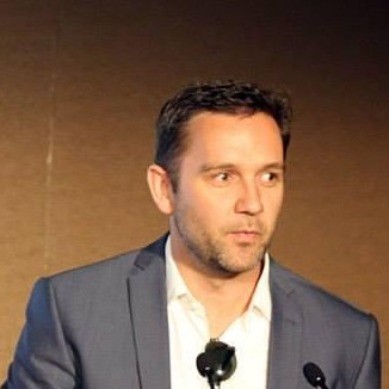
Webinar Panel



More in the Company Culture 101 Series
This webinar is part of our series of insight-led conversations for the UK Company Culture Awards community.
Building a Stronger Company from the Inside Out
The starting point for any organisation serious about culture. What it actually means, why it matters more than most leaders realise, and how to begin building something intentional rather than accidental.
Flex for Success: Making Flexible Working Work
This session explores how organisations are making flexibility a genuine part of their culture, not just a line in the employee handbook.
All sessions are available to watch on the Don’t Panic Awards YouTube.